Written by Sofia Di Stefano, photography by Yeelen Tavilla
modified 27 May 2026
6 min. read
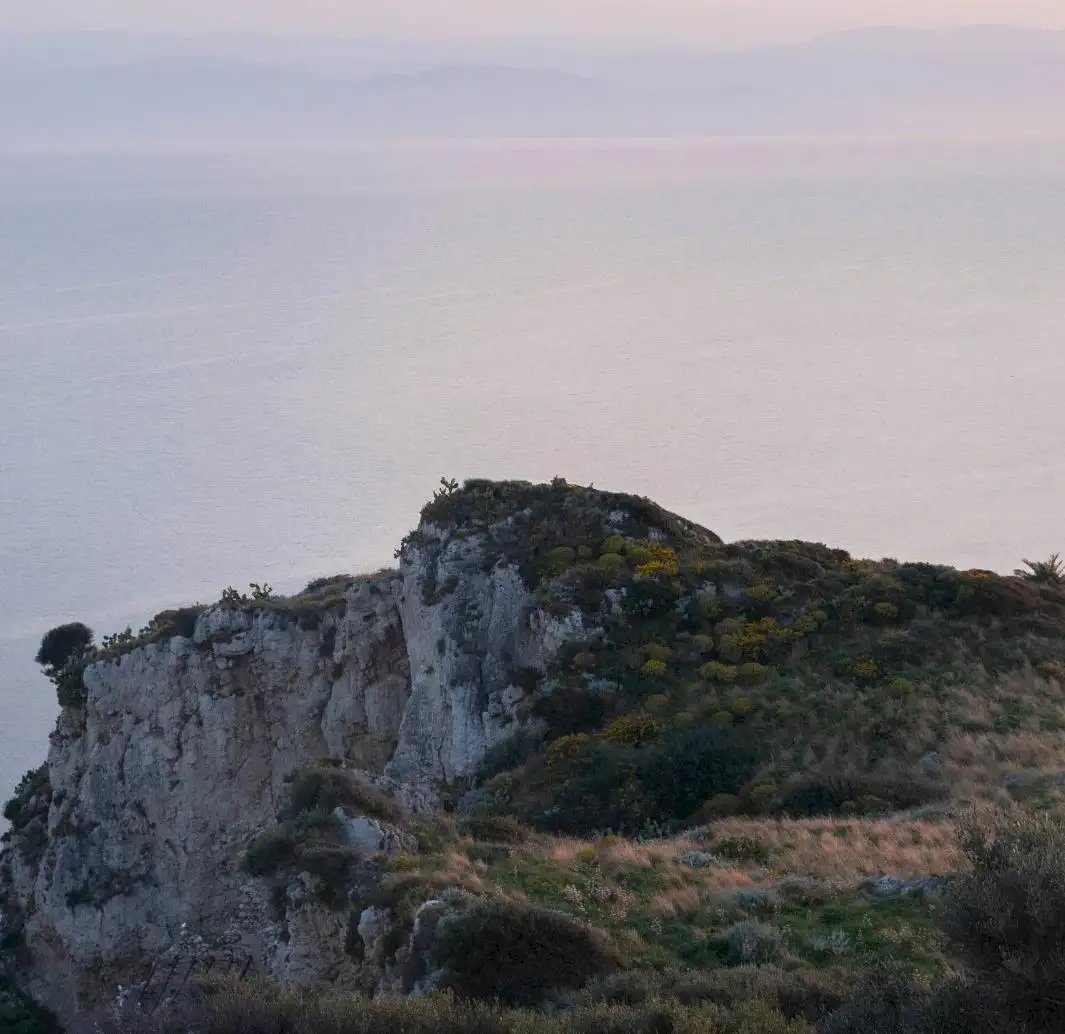
Elio Vittorini once called Scicli perhaps the most beautiful city in the world, a line tucked into an unfinished novel that surfaced only after his death. The city, for its part, never paused for recognition. Driving through the Iblean hills, the valley cinches tight, limestone shifting from pale to ochre. Then, with barely a warning, Scicli reveals itself below: honey-lit and serene, cave dwellings pressed into the cliffs, spires reaching for a sky that feels impossibly wide. Scicli is one of the eight Baroque jewels of the Val di Noto, UNESCO-listed but still quietly under the radar. Come now, before the world catches up.
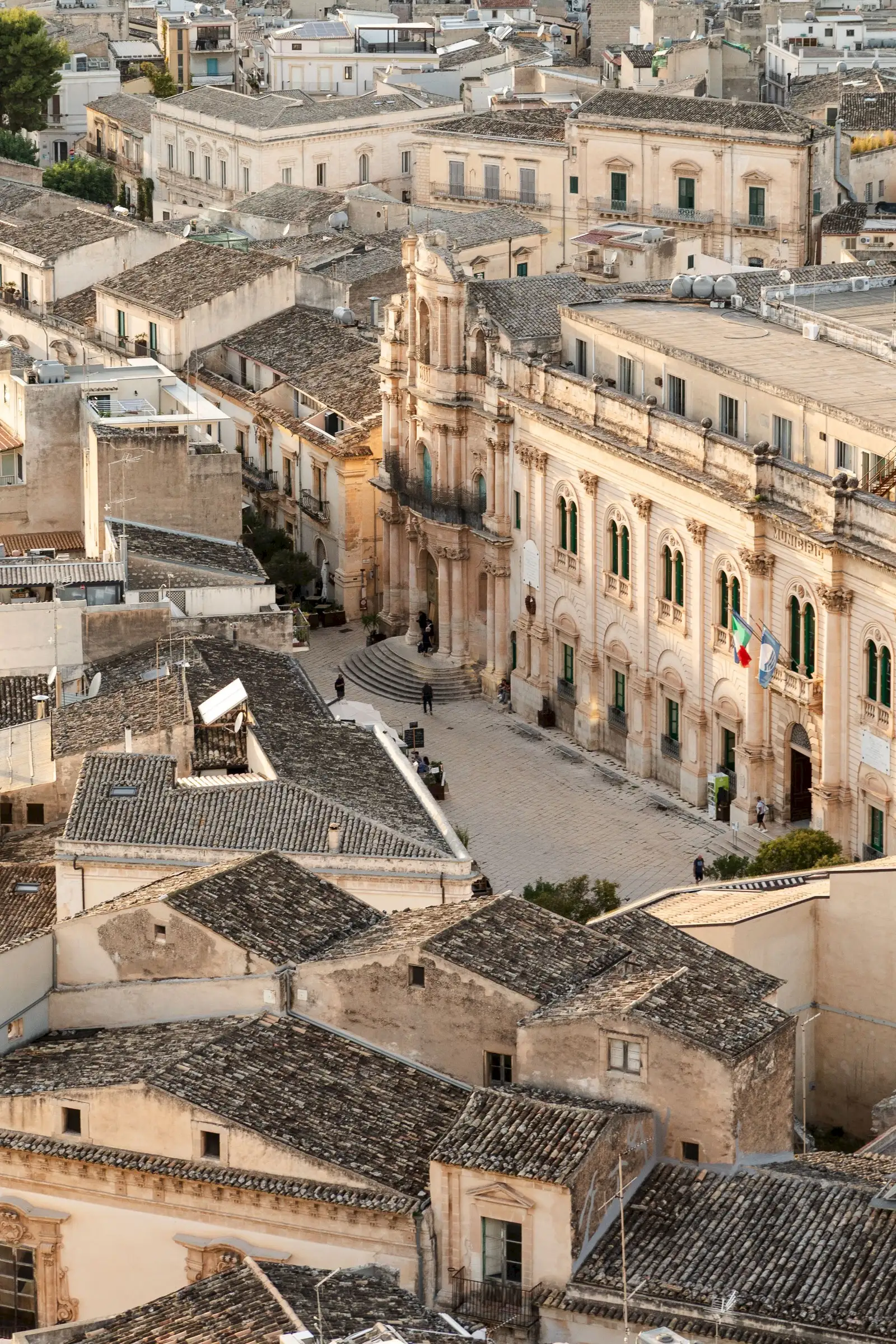
If you’ve watched Inspector Montalbano, the Italian crime series that ran for over twenty years and inspired many to dream of Sicily, you already know Scicli, even if you didn’t realize it. The fictional town of Vigàta is set here. The police station where Montalbano argues with his superiors and solves impossible cases is the actual town hall on Via Mormino Penna. The pharmacy he passes is the Antica Farmacia Cartia, still preserved exactly as it was. The Baroque street where his Fiat Tipo speeds by at the start of each episode is the same one you’ll be walking along.
Since 1999, Scicli has been the main filming location for the series and, later, for Il Giovane Montalbano, starting in 2012. Other spots nearby were used too: the port of Donnalucata became Marinella’s seafront, and Sampieri’s old brick factory, the Fornace Penna, appeared in one of the series’ most celebrated episodes.
You don’t have to be a fan to enjoy any of this. But if you are, it feels both odd and special to stand in a real town that spent twenty years acting as a fictional one, so well that the story became part of its identity.
Morning
Start on Via Francesco Mormino Penna, the town’s sunlit spine. Even if the name doesn’t ring a bell, the street might: this is where Montalbano’s Fiat Tipo idles in front of the town hall, moonlighting as the Commissariato di Vigàta. Step inside the mayor’s office, which is open to visitors, still dressed in its TV role. Even if you’ve never seen the show, the overlap of fiction and reality feels quietly surreal.
The street is a gallery in motion. Baroque palazzi and churches stand shoulder to shoulder, their facades catching the first light. At Palazzo Beneventano, look up: balconies rest on a riot of stone faces and winged beasts, each figure grimacing or grinning beneath the weight.
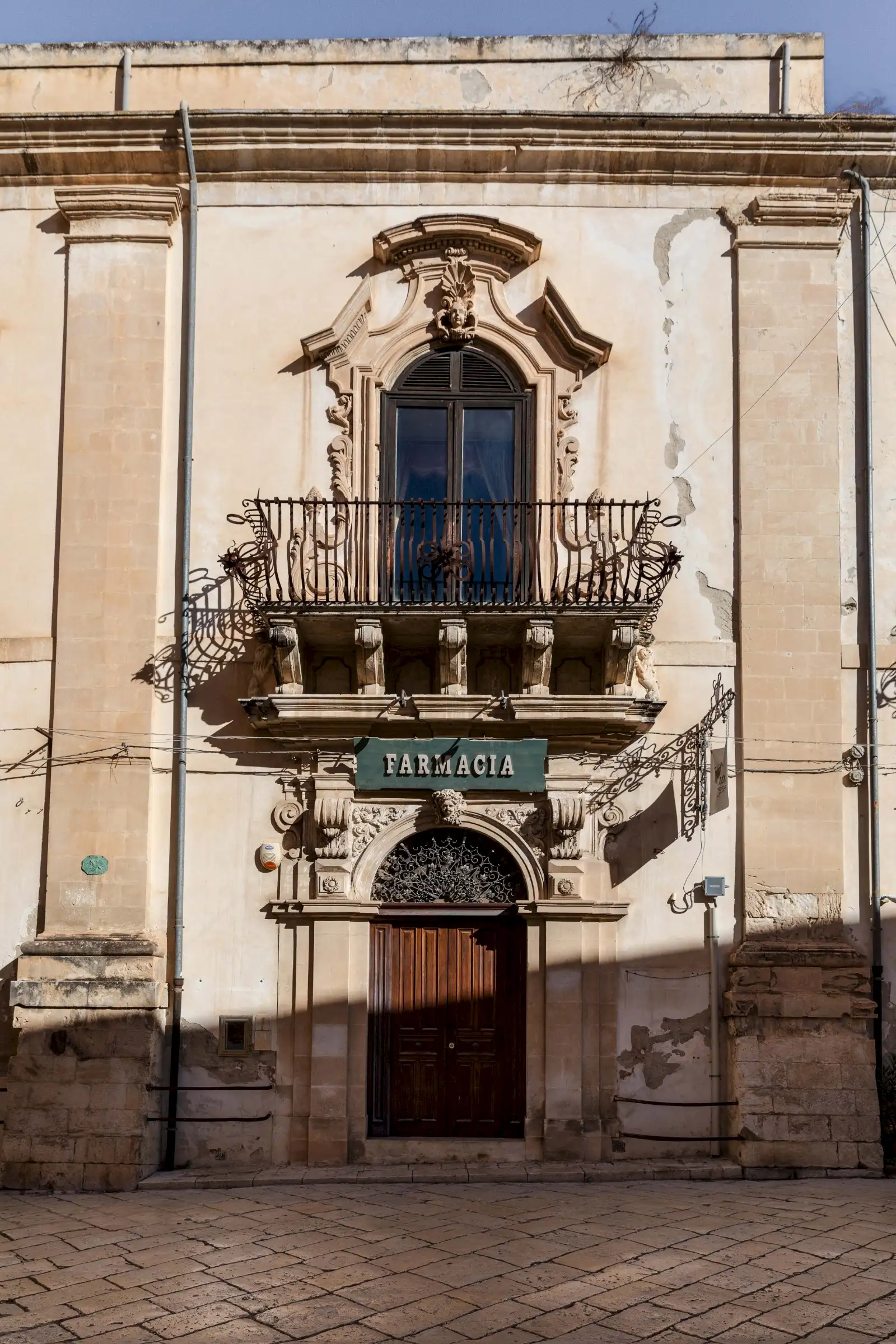
A few steps away, Antica Farmacia Cartia sits frozen in time: a 19th-century pharmacy with a wooden counter, towering cabinets, and glass vials. It made a cameo in Montalbano, but even without the TV tie-in, it feels like a secret you’ve stumbled into. Ten minutes here and you’ll have a story to slip into dinner conversation.
Mid-Morning
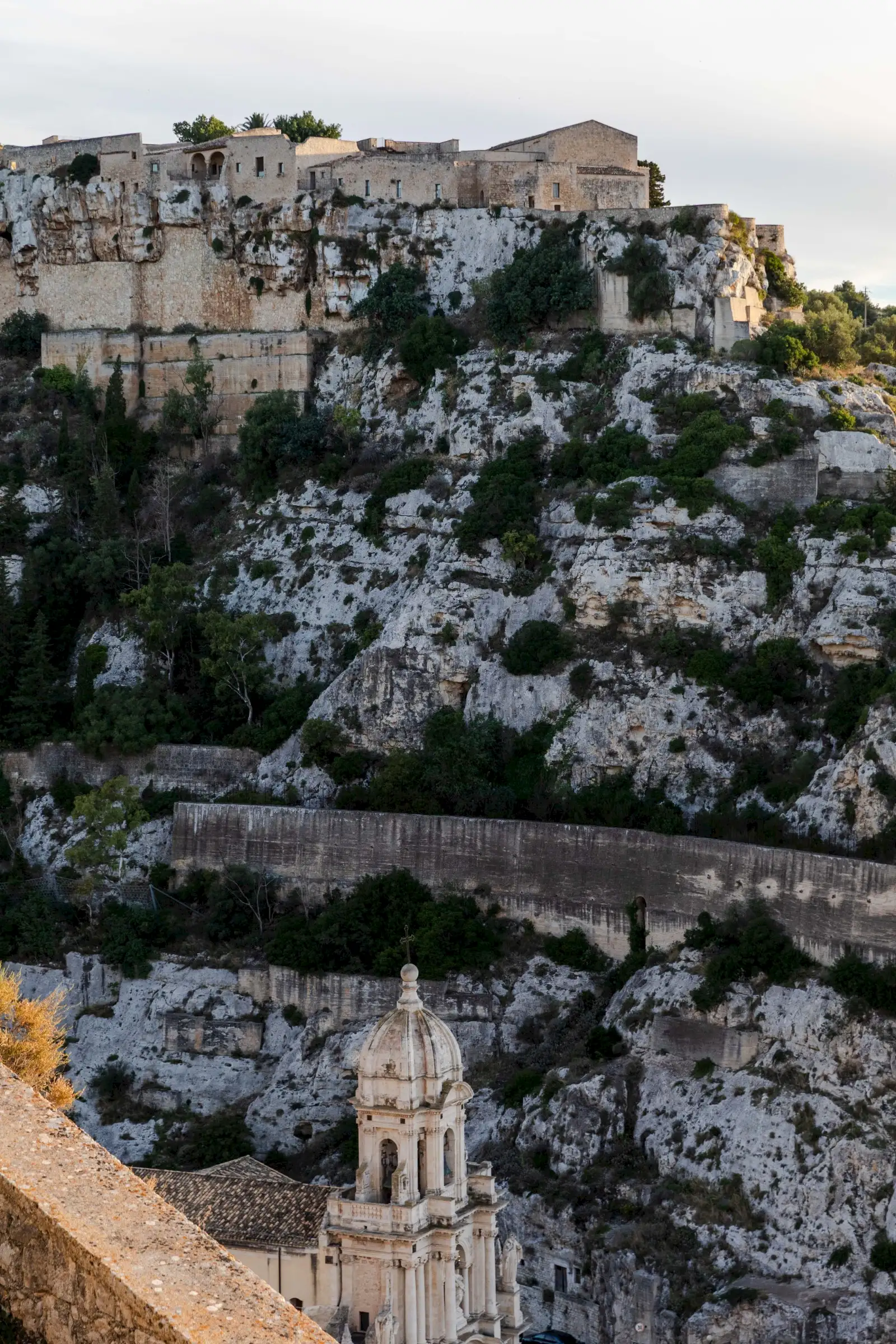
Climb toward San Matteo hill and the ghostly cave quarter of Chiafura. What began as a Byzantine necropolis carved into the rock became, over centuries, a living neighborhood: rock chapels, pocket gardens, a hidden world behind limestone doors. The last families left in the 1950s, after writers and artists like Guttuso, Levi, and Pasolini turned their gaze to the area. Since then, the caves have stood silent.
At the summit, the church of San Matteo stands roofless and regal, keeping watch over the valley. Below, cave mouths puncture the hillside. One is open to visitors: A Rutta ri Ron Carmelu, a house museum kept by the grandson of its last inhabitant, who will walk you through the rooms where his grandparents lived. Book ahead, it’s worth the detour.
That’s the magic: the rawness of Chiafura above, the Baroque elegance below. Scicli holds both, and neither ever overshadows the other.
Lunch
Head back down and find My Name is Tannino, a wine bar tucked beside the old Spanish canal on Via Aleardi. The waterway, built centuries ago to channel rain, still runs clear beside the terrace, giving the place its own gentle soundtrack.
Order the vastidduzza, Scicli’s answer to street food: a golden, round semolina dough fritter, warm and topped with whatever is in season. It’s humble, hyperlocal, and almost impossible to find anywhere else. The kitchen leans into Sicilian flavors, the wine list is tight and thoughtful, and the owner’s welcome is the kind that makes you stay for another glass. This is where the day slows down.
Afternoon
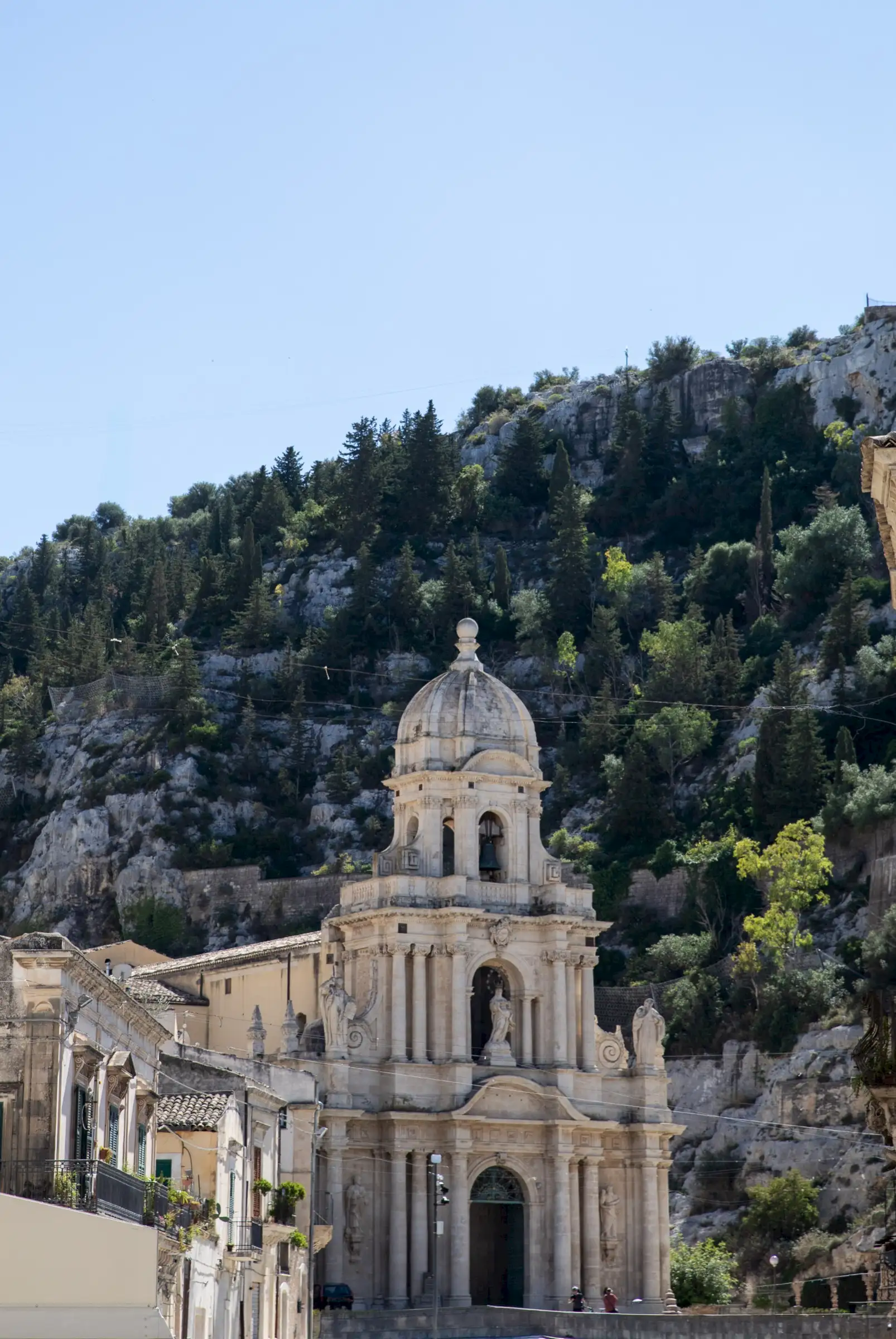
After lunch, slip into the Church of San Bartolomeo, anchored at the bottom of a gorge, with rock walls rising on either side. Inside: a 17th-century Madonna della Pietà, gilded altars, and a hush that feels deserved.
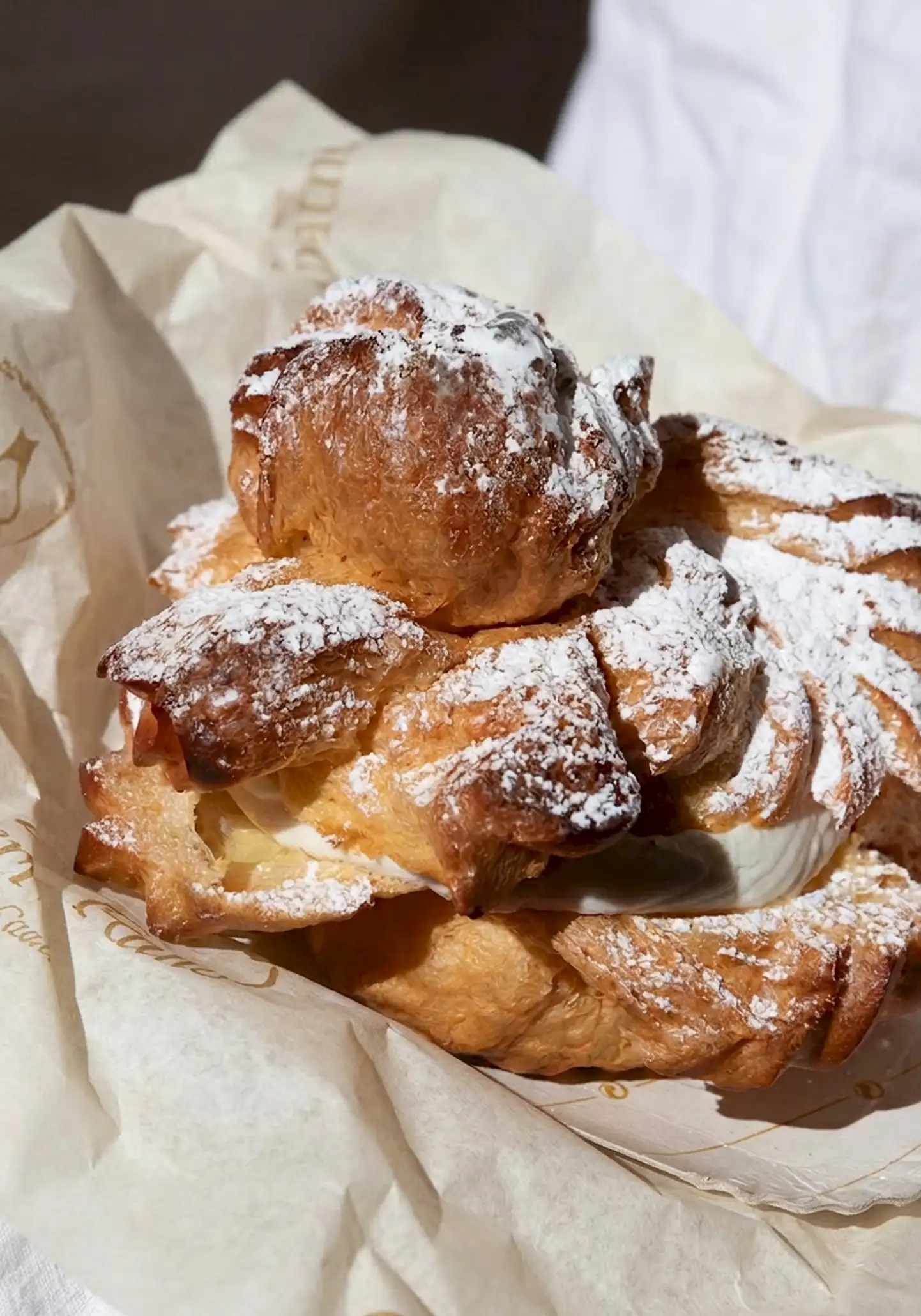
Then, find a pasticceria and order a Testa di Turco. Don’t call it a cream puff. It’s oversized, made with choux and lard, shaped like a turban, and stuffed with ricotta or custard. The form nods to the Saracens, defeated by the Normans in 1091, or so the legend goes, with the Madonna delle Milizie riding in on a white horse. The pastry was born to mark that victory. It’s still the thing to eat here. Pasticceria Basile is the place, a family business since the 1960s, and still the one locals point you toward.
As the afternoon fades, head up to Santa Maria della Croce, perched on the hill above town. The church is small, unused, but the view of Scicli unfurling below, the valley washed in gold, is the kind you’ll want to pocket for later.
Evening
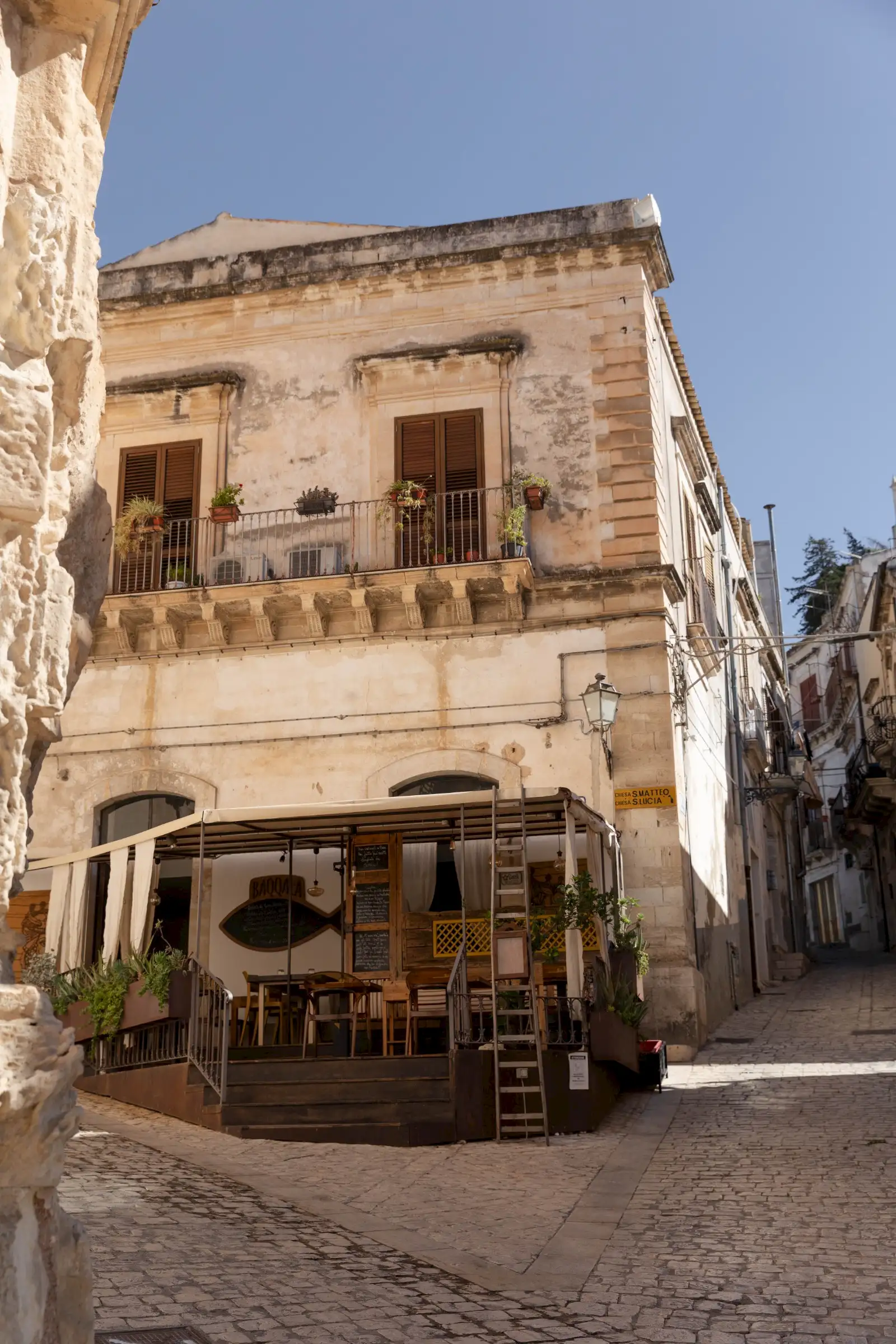
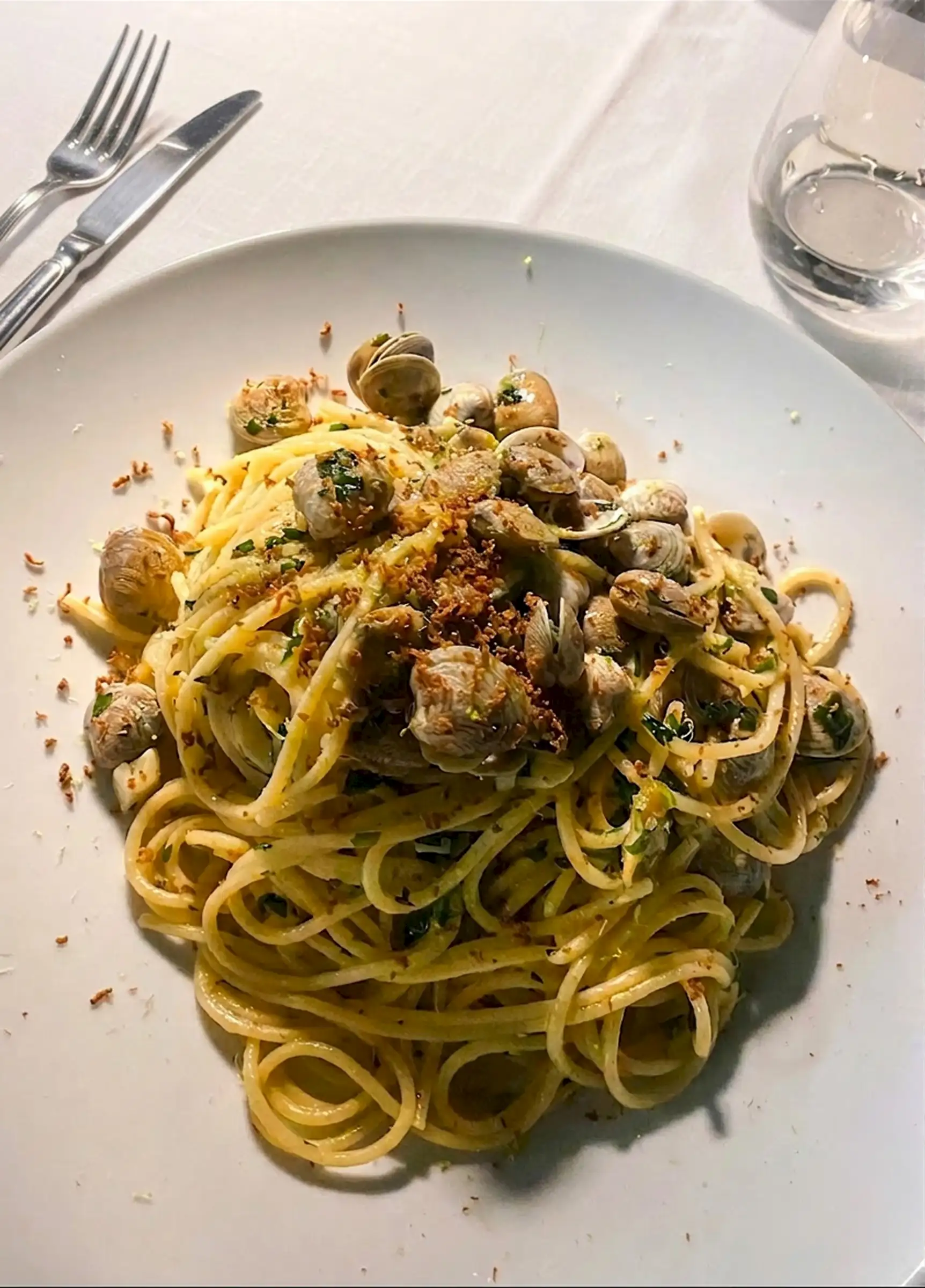
Dinner is at Baqqalà, tucked behind Palazzo Beneventano in Piazza Angelo Ficili. The place is tiny, just a handful of tables inside and a few more on the terrace. Corrado, the owner, greets you himself. The menu is short, shifting with the catch: sardine salad with orange and celery, seared octopus, spaghetti tangled with bottarga, pasta with tuna, raw fish if it’s pristine. Trust their suggestions and order a bottle of local white. It’s the kind of meal that might make you rethink your departure.
Via Mormino Penna at Night
End the night as locals do: a slow passeggiata along Via Mormino Penna, now hushed and glowing beneath the limestone facades. Claim a table at a bar, order something cold, and let the evening drift.
If that's where you've landed, we have a few properties in the area worth knowing about. La Dimora is a contemporary villa with a saltwater infinity pool just outside Scicli. Sesta is a restored 19th-century farm in the hills between Noto and Modica, quiet and well-placed for all of it. Donnalucata sits in Sicily's southeast corner, close to the sea and within easy reach of several baroque towns. Carrittaria is a beautifully restored Sicilian family farm between Ragusa and the beaches of Marina di Ragusa, ideal for larger groups. And Villa Marina is a modernist villa on a 50-hectare private estate between Scicli and the coast, with six bedrooms, a pool that looks out to sea, olive and almond groves on all sides.
However long you stay, you'll leave wishing it had been longer.